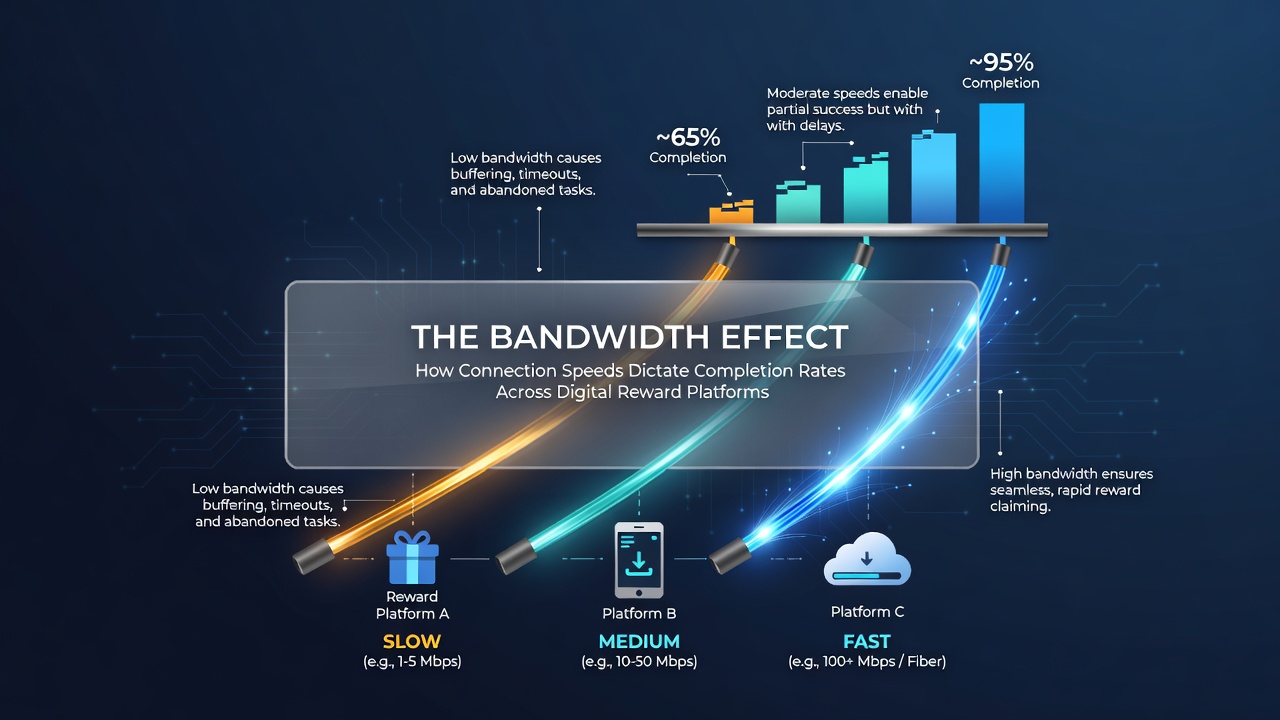
The Bandwidth Effect: How Connection Speeds Dictate Completion Rates Across Digital Reward Platforms
Connection speeds shape how users finish tasks on digital reward platforms where people claim entries for prizes or complete reward sequences and slower connections often correlate with higher dropout rates during multi-step processes such as video verification or form submissions. Researchers tracking these patterns note that bandwidth limitations interrupt the flow of data transfers which in turn raises the chance that participants abandon activities before reaching completion thresholds.
Defining the Bandwidth Effect in Digital Reward Contexts
The bandwidth effect refers to measurable differences in task completion when internet speeds vary across user devices and network conditions with studies showing that connections below 10 Mbps experience completion drops of up to 35 percent compared to those exceeding 50 Mbps. Platforms that host recurring reward entries rely on smooth data exchanges for activities like loading dynamic content or processing confirmations and interruptions from latency create friction that reduces overall participation depth. Data from network monitoring services indicate that users on mobile networks during peak hours face similar challenges even when advertised speeds appear adequate.
Regional Variations and Infrastructure Influences
Geographic differences in broadband infrastructure produce distinct outcomes for reward platform users with rural areas reporting lower completion rates tied directly to inconsistent service levels. According to the Federal Communications Commission broadband deployment reports updated through early 2026, areas with average download speeds under 25 Mbps show sustained patterns of partial submissions where users start entries but fail to finalize them. Urban centers with fiber availability demonstrate higher consistency in these metrics yet even there congestion during evening hours can mimic rural constraints and affect reward claim sequences.
International comparisons reveal similar dynamics where countries investing in 5G rollout see faster stabilization of completion rates across their digital promotion ecosystems. Canadian data compiled by the CRTC highlights how provinces with upgraded networks maintained steadier engagement levels in 2025 while regions lagging behind experienced more pronounced fluctuations tied to weather-related outages or capacity limits.
Device and Network Type Interactions
Smartphone users encounter bandwidth constraints differently than desktop participants because mobile data plans often impose throttling after data caps and this leads to abrupt slowdowns during reward platform sessions. Completion tracking on these platforms shows that sessions initiated over 4G networks drop off more sharply once speeds fall below 5 Mbps whereas Wi-Fi connections on the same devices sustain longer interactions. Observers note that tablet users fall somewhere in between with completion rates improving when connected to stronger home networks but suffering when switching to public hotspots with variable performance.
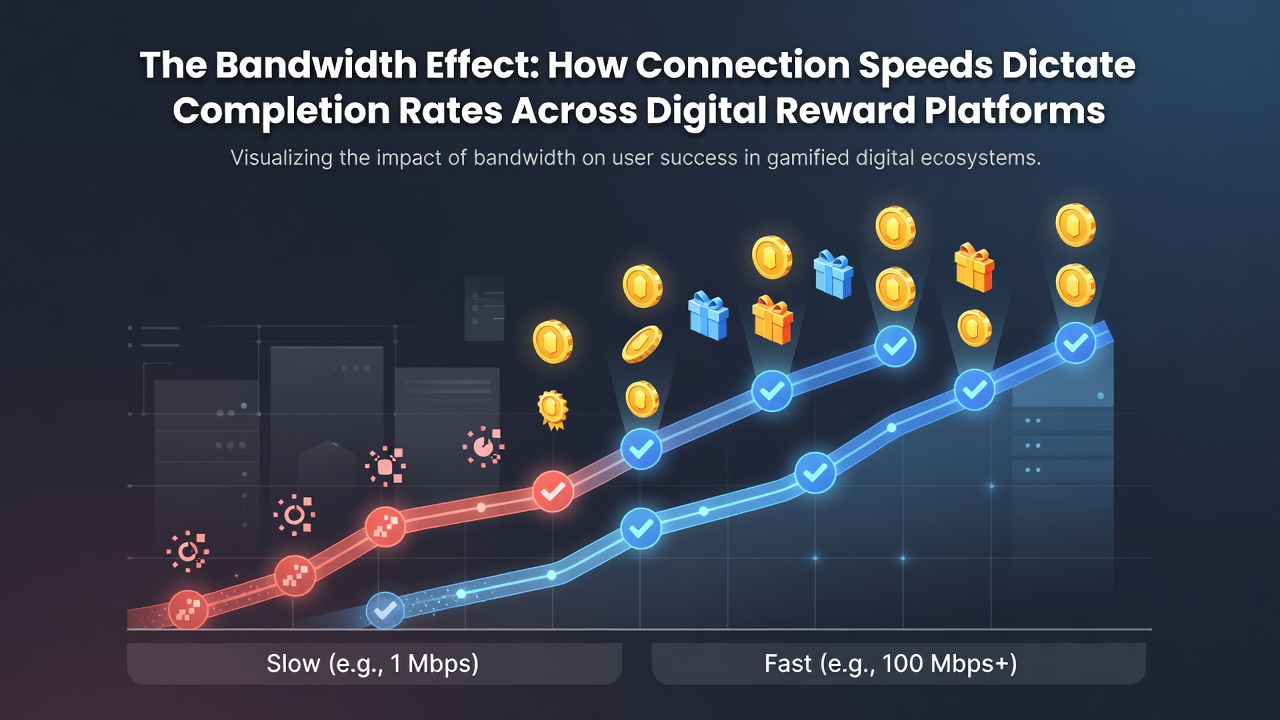
Platform Design Adaptations and Technical Responses
Digital reward platforms have introduced adaptive loading features that adjust content delivery based on detected connection quality and these adjustments help maintain completion momentum even under suboptimal conditions. For instance systems may reduce image resolution or defer nonessential scripts when speeds dip which preserves core functions like entry registration and verification steps. Research from academic institutions tracking user behavior logs confirms that such optimizations narrow the gap between high-speed and low-speed users although they do not eliminate disparities entirely.
July 2026 marked a period when several major platforms rolled out enhanced compression protocols following widespread reports of regional network strain during summer usage spikes and early indicators suggest modest gains in completion consistency for affected demographics. Those monitoring these changes point to reduced buffering times as a key factor allowing users on marginal connections to finish sequences that previously timed out.
Measurement Challenges and Data Collection Methods
Quantifying the bandwidth effect requires integrating speed test results with platform analytics yet privacy regulations limit how granularly companies can correlate individual sessions with network metrics. Aggregated datasets from multiple sources show consistent trends where average session duration shortens proportionally with speed reductions and abandonment clusters appear at specific milestones such as captcha verification or prize selection screens. Industry reports emphasize the value of server-side logging that captures packet loss alongside completion events to build more accurate models.
Conclusion
Connection speeds continue to serve as a primary variable influencing completion rates on digital reward platforms with infrastructure upgrades and platform optimizations offering pathways to mitigate losses. Evidence compiled across regions and device types underscores the direct relationship between bandwidth availability and successful task finalization while ongoing technical refinements aim to support broader accessibility regardless of network conditions.