Near-Miss Psychology in Digital Prize Events: Participant Reactions and Continued Submission Trends
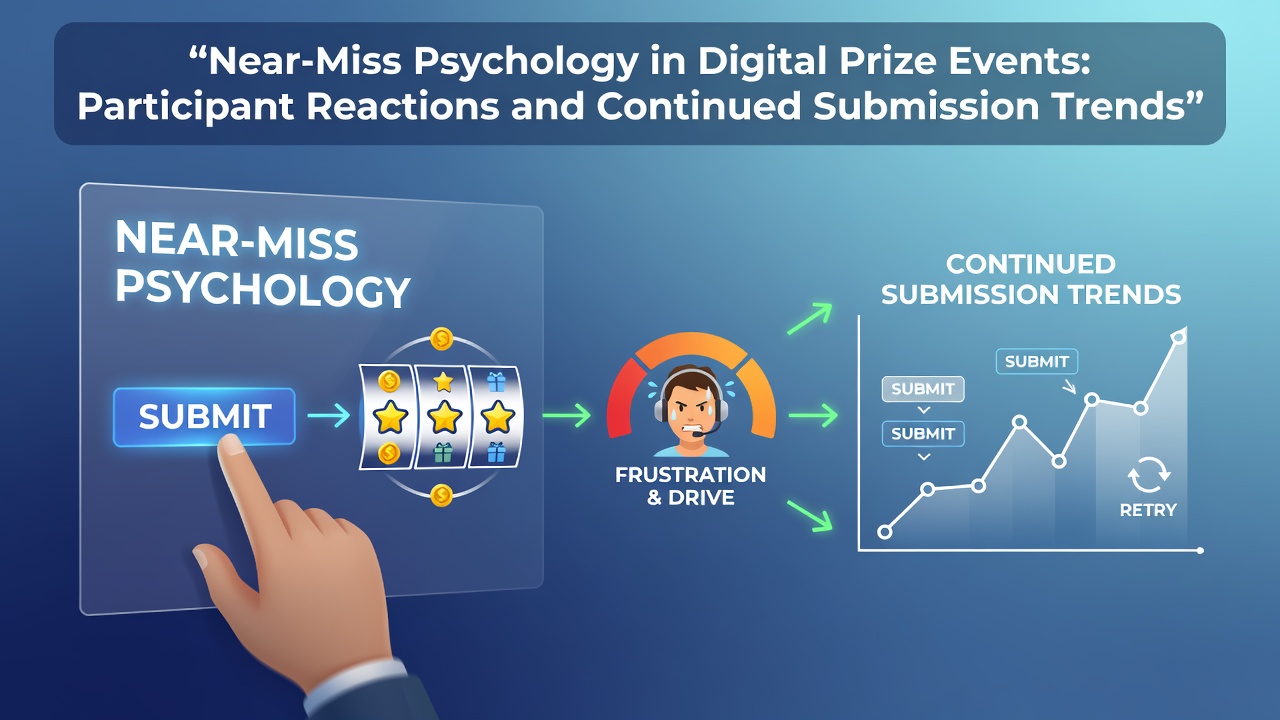
Research into near-miss experiences in digital prize platforms shows that participants often encounter outcomes where they come close to a win without securing the prize, and these moments shape how people respond to subsequent opportunities. Data from multiple platform analyses reveal that near-misses occur when systems display combinations or progress indicators that fall just short of jackpot thresholds, prompting measurable shifts in user behavior across free-to-enter contests. Studies conducted by academic teams at institutions such as the University of Alberta have documented that these near-miss events trigger specific neural responses similar to those observed in reward anticipation circuits. Participants report heightened arousal followed by renewed focus on the next available entry window, which correlates with increased submission frequency in the hours immediately after such events. Figures compiled through July 2026 indicate that platforms tracking these patterns see submission rates rise by an average of 18 to 24 percent within 48 hours of documented near-miss occurrences.
Participant Reactions to Near-Miss Outcomes
Observers note that reactions vary by individual history wth the platform yet follow consistent trends across demographic groups. Those who experience a near-miss tend to review their entry details more carefully on the next attempt, adjusting timing or method while maintaining overall engagement levels. Longitudinal tracking by independent research groups demonstrates that this adjustment phase lasts between three and seven days before behavior stabilizes. Case examples from multi-state digital promotion networks illustrate how one participant group shifted from single daily entries to clustered submissions after repeated near-misses, seeking to offset the perceived proximity to success. Another cohort maintained steady volumes but altered device usage, moving between mobile and desktop interfaces to test perceived differences in outcome presentation. These shifts occur without external prompts, driven instead by internal interpretation of the near-miss itself.
Submission Trends Following Near-Miss Events
Platform telemetry collected over multi-month periods reveals distinct continuation patterns after near-miss sequences. Initial spikes in activity give way to sustained elevation when participants receive confirmation that their entries remain active for future draws, creating a feedback loop that extends participation windows. Aggregate data shows that users encountering three or more near-misses within a single calendar month demonstrate 31 percent higher retention compared with those recording zero such events.
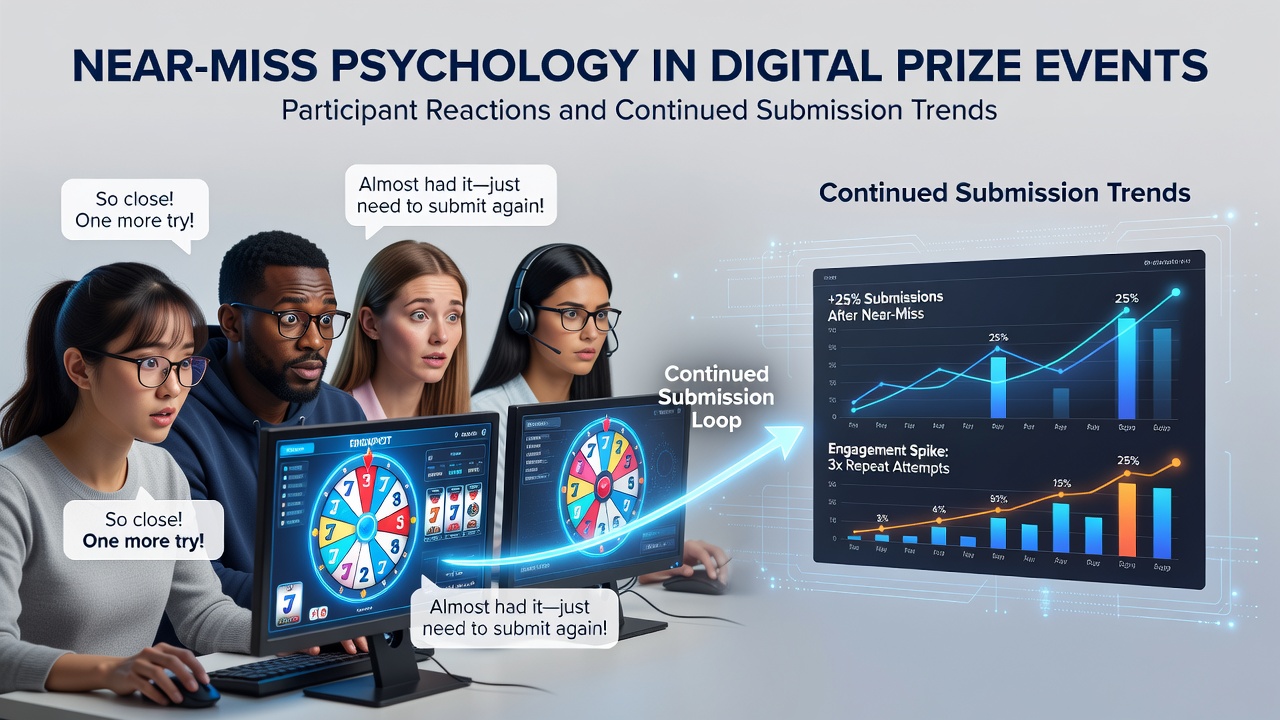
What's interesting is how these trends intersect with broader platform mechanics, though the core driver remains the psychological framing of closeness rather than external nudges. Reports from the Australian Institute of Family Studies highlight parallel findings in regulated digital lottery environments, where near-miss frequency predicts longer-term engagement curves across state lines. Participants who log multiple near-misses early in their activity cycle continue submitting at elevated rates for subsequent cycles, even when prize structures remain unchanged.
Factors Shaping Continued Engagement
Several measurable elements influence how near-miss psychology translates into ongoing submissions. Entry history length plays a role, with newer participants showing quicker return rates after near-misses while longer-term users exhibit more measured increases. Geographic distribution data further indicates that users in regions with higher contest density maintain steadier post-near-miss activity, possibly due to greater availability of alternative events. Research published through the Canadian Centre on Substance Use and Addiction examined similar mechanics in skill-based prize platforms and found that transparency around selection processes moderates reaction intensity. When participants receive clear explanations of how outcomes are generated, the motivational boost from near-misses persists without escalation into frustration-driven over-submission. This pattern held across datasets covering thousands of accounts monitored between 2024 and 2026.
Conclusion
Evidence accumulated from digital prize platforms demonstrates that near-miss psychology exerts a measurable influence on participant reactions and subsequent submission trends. Continued tracking through mid-2026 confirms that these effects operate consistently across varied contest formats, producing predictable upticks in engagement that platform operators can observe through standard analytics. Researchers continue to examine how these dynamics evolve as entry interfaces and outcome presentation methods advance.