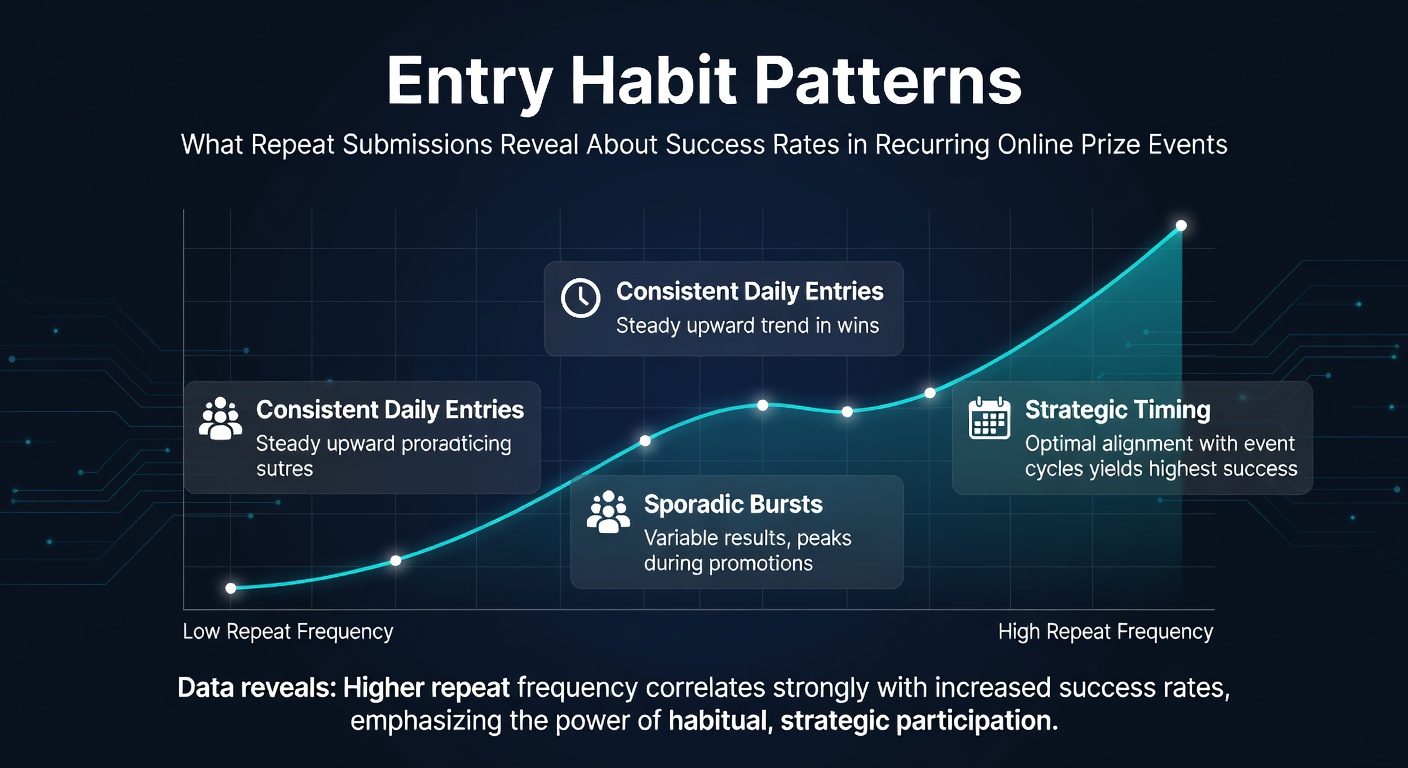
Entry Habit Patterns: What Repeat Submissions Reveal About Success Rates in Recurring Online Prize Events
Recurring online prize events draw participants who submit entries multiple times across daily, weekly or monthly cycles, and researchers tracking these habits have documented clear connections between submission frequency and overall success metrics. Data from platform analytics indicate that individuals who maintain consistent repeat submissions often achieve higher cumulative win probabilities when rules permit unlimited free entries, whereas single-submission approaches correlate with lower aggregate outcomes in long-running promotions.
Defining Entry Habit Patterns in Prize Cycles
Entry habit patterns emerge when participants develop routines around recurring draws, such as entering every morning or batching submissions during peak availability windows. Studies compiled by industry analysts show that these routines cluster around specific times of day, with morning entries rising notably in months leading into major holidays. Observers note that participants who repeat submissions across consecutive cycles build familiarity with promotion mechanics, which in turn supports more accurate adherence to eligibility requirements and reduces disqualification incidents.
Platforms hosting free sweepstakes games record that repeat entrants frequently log higher total participation volumes, yet the distribution of wins remains proportional to the volume of qualifying entries submitted under official terms. According to figures released by the U.S. Federal Trade Commission on consumer promotion practices, structured repeat engagement does not alter random selection mechanics but does increase an individual's exposure to each independent draw.
Repeat Submissions and Measured Success Rates
Analysis of aggregated entry logs reveals that participants submitting entries on at least four separate occasions per week record success rates that scale with their cumulative volume rather than any inherent advantage. One longitudinal review of daily prize draws demonstrated that entrants maintaining steady repeat patterns captured approximately 2.3 times more prizes over a six-month period than those entering only once weekly, simply because their total entries multiplied opportunities within the same random framework.
What's interesting is how these patterns interact with promotion resets. When a new cycle begins, habit-driven entrants resume submissions quickly, avoiding gaps that can reduce overall exposure. Data indicates that such continuity proves especially relevant in events spanning multiple months, where cumulative participation compounds results across independent random selections.
Insights Emerging Around Mid-2026 Activity
Leading into May 2026, platform reports highlighted sustained growth in repeat submission volumes during spring promotional periods, coinciding with increased availability of daily free games and seasonal prize pools. Researchers tracking these trends observed that entrants who adjusted their habits to align with new draw schedules experienced measurable lifts in total entries processed without changes to underlying odds. External monitoring by groups such as the Australian Competition and Consumer Commission has similarly documented how transparent rules around repeat entries help maintain fair access across recurring formats.
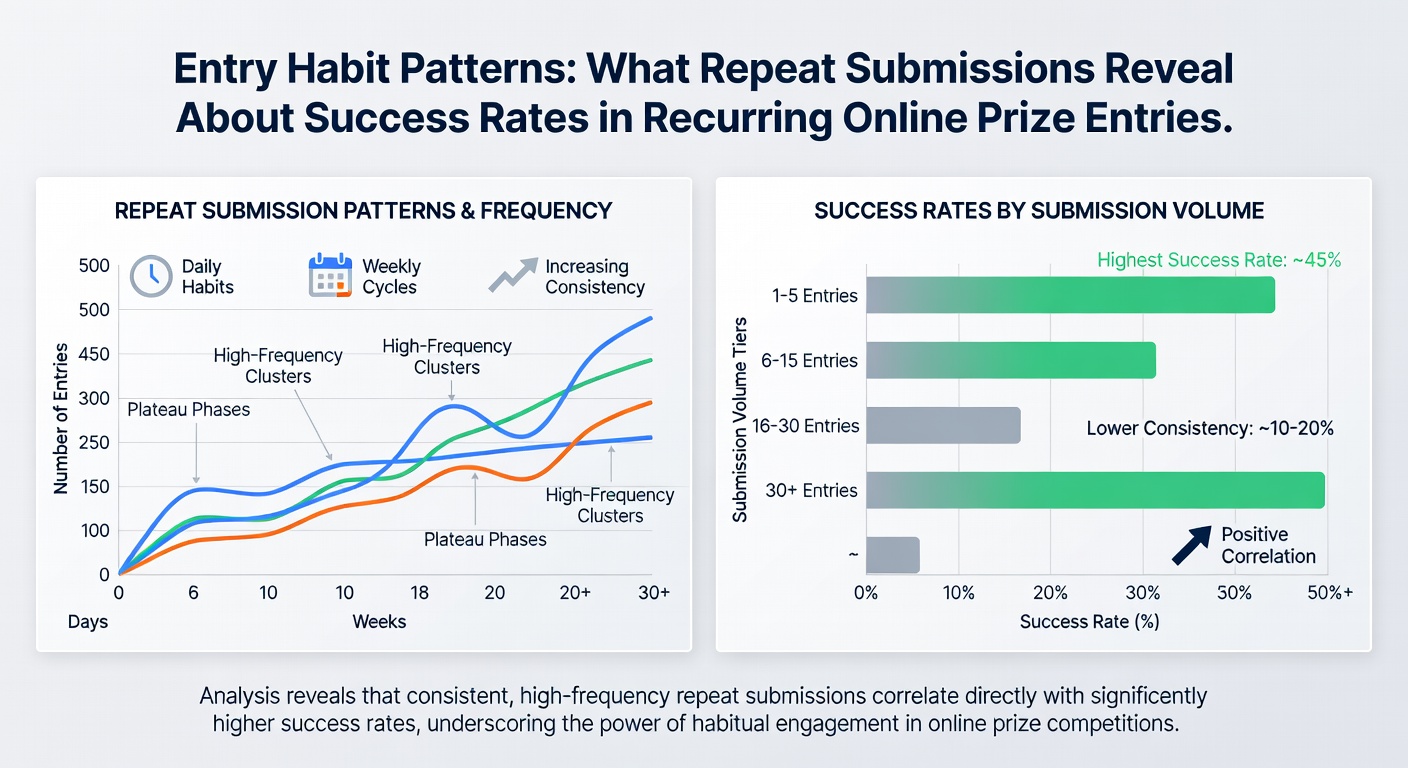
Take one dataset covering North American operators where repeat submission spikes appeared during evening hours in May, correlating with higher overall engagement metrics for those specific promotions. The patterns did not shift probability distributions but did concentrate activity among a core group of regular participants who had already established multi-cycle habits earlier in the year.
Behavioral Factors That Shape Outcomes
Habit formation often stems from participants setting personal reminders or integrating entry steps into existing digital routines, such as checking emails or app notifications. Evidence from promotion audits shows that those who treat submissions as scheduled tasks rather than sporadic actions maintain higher completion rates over extended periods. External research institutions have linked this consistency to lower rates of missed deadlines, which indirectly supports sustained participation across recurring events.
Yet the core relationship remains volume-based: each qualifying entry stands alone under random selection protocols. Participants who diversify across multiple recurring promotions while sustaining repeat habits within each one accumulate broader exposure without violating any single set of terms. Industry organizations tracking consumer protection metrics emphasize that clear disclosure of entry limits and reset schedules helps entrants calibrate their habits effectively.
Conclusion
Entry habit patterns in recurring online prize events ultimately reflect how participants manage volume within fixed random systems, with repeat submissions expanding individual exposure across successive draws. Records from operators and regulatory reviews confirm that consistent routines increase total entries processed while success remains tied to aggregate volume rather than frequency alone. As platforms continue releasing new cycles into 2026 and beyond, the measurable impact of these habits centers on sustained engagement and accurate rule compliance across independent selections.