Deadline Dynamics: How Time Limits Shape Sweepstakes Participation Patterns
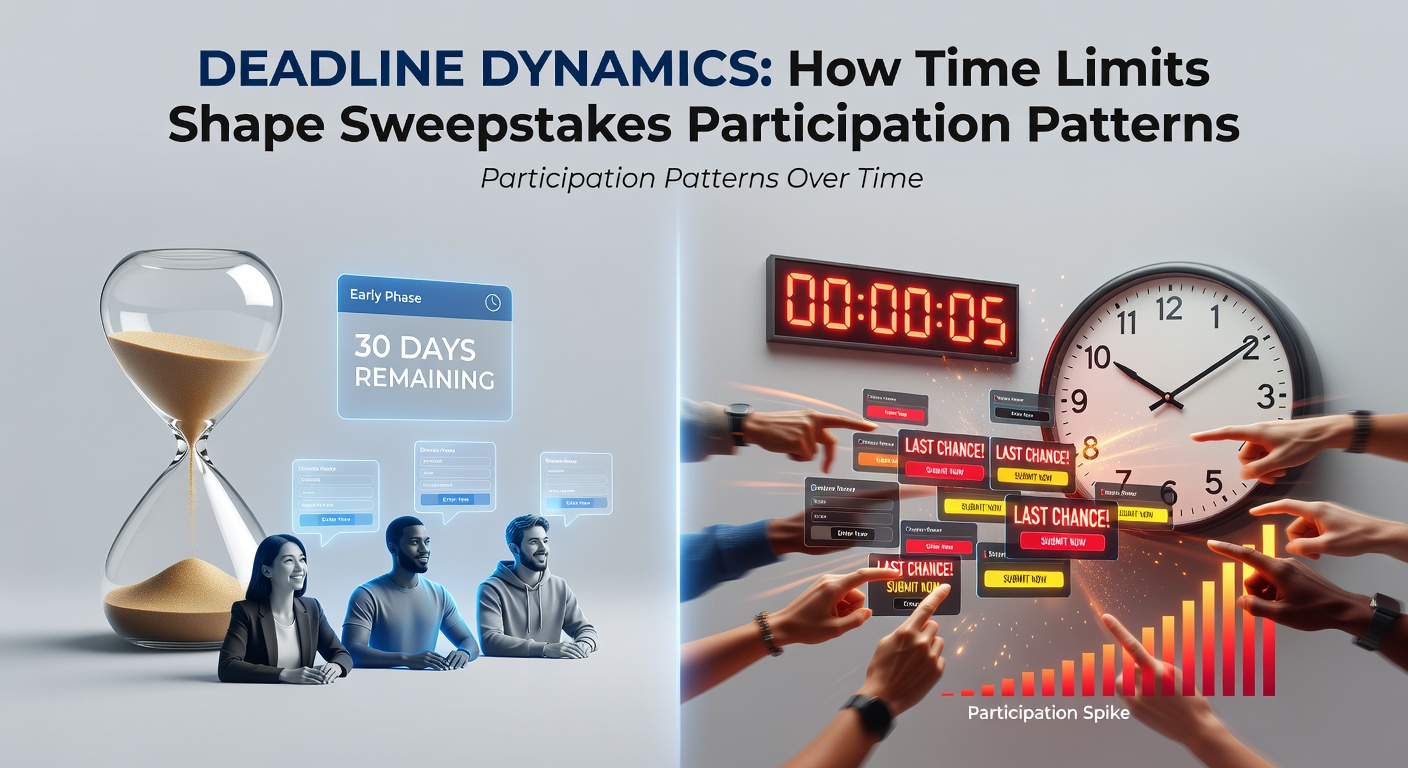
Sweepstakes operators have long observed how deadlines dictate entry rhythms; participants trickle in steadily at first, but then entries explode right before the clock runs out, creating patterns that reveal much about human behavior under pressure.
The Rush to the Finish: Entry Spikes Near Close
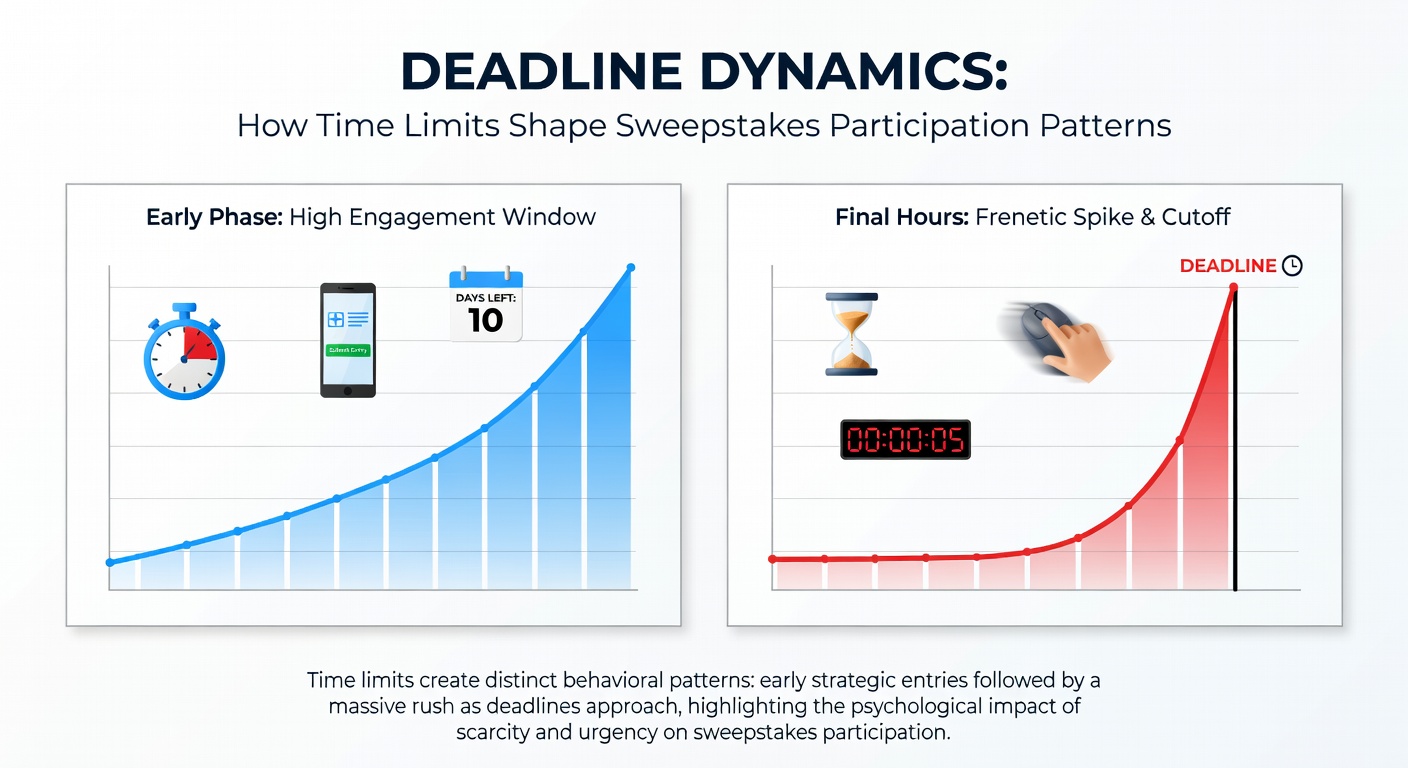
Data from major platforms indicates that up to 70% of total entries in popular sweepstakes arrive within the last 48 hours, according to analytics shared by industry trackers like PROMO, a key association for promotional marketing. This surge happens because time limits trigger urgency; people who spot a contest early might bookmark it for later, only to swarm back when the end looms, while procrastinators jump in at the eleventh hour.
Take one high-profile giveaway for a luxury vacation package that ran for 30 days; researchers tracking it found entries flatlined below 5% of the total during week one, climbed gradually through the middle, then skyrocketed to over 60% in the final stretch, with server traffic peaking at 10 times normal levels on closing day. Such patterns repeat across contests, whether they're daily draws or month-long marathons.
Early Birds Versus Last-Minute Entries
Observers note two distinct participant groups shaping these dynamics: the dedicated early entrants who submit within the first 24 hours, often accounting for 10-20% of totals, and the bulk who wait until deadlines pressure them into action. Studies from university researchers at the University of Southern California reveal that early birds tend to be repeat players familiar with rules, submitting polished entries right away, whereas latecomers include casual users spurred by last-minute reminders or social shares.
But here's the thing; this split influences prize distribution odds, since early entries dilute competition initially, yet the late rush can overwhelm systems, sometimes leading to extended deadlines or tech glitches that operators scramble to fix. Platforms counter this by capping daily submissions or using staggered draws, yet the core pattern persists.
Psychological Triggers Behind Deadline-Driven Behavior
Research indicates time scarcity activates loss aversion in participants; folks hate missing out more than they love potential wins, so deadlines amplify FOMO, driving those final-hour floods. Data from a Canadian Competition Bureau report on consumer promotions underscores how fixed end dates boost overall engagement by 40% compared to open-ended contests, although they also heighten complaints about perceived unfairness if entries crash servers.
What's interesting is how email reminders and countdown timers exacerbate this; one case study of a tech gadget sweepstakes showed open rates for "3 days left" blasts hitting 45%, compared to 15% for mid-contest nudges, funneling users straight to entry forms.
And while operators celebrate the volume, they grapple with the backend strain; peaks strain APIs, delay verifications, and complicate random selections, prompting some to build in buffers like soft closes 24 hours early.
Short Versus Long Windows: Contrasting Patterns
Deadlines under 7 days spark immediate frenzy, with 80% of entries crammed into the first three days, per figures from Australian consumer watchdog reports; longer 30-60 day runs, however, allow buildup, where participation ebbs and flows around paydays or weekends, peaking predictably near month-end. Experts who've analyzed thousands of promotions discover that ultra-short flash sweeps—those 24-hour blasts—draw niche crowds of superfans, yielding higher conversion from views to entries at 25%, but lower total volume overall.
Turns out, the sweet spot hovers around 14 days; data shows optimal engagement there, balancing urgency without overwhelming casual participants who need time to gather details like alternate methods of entry.
Regional Variations in Deadline Impacts
Participation patterns shift by region due to cultural and regulatory differences; in the US, where sweepstakes abound under FTC guidelines, last-minute surges dominate because aggressive marketing pushes reminders via apps and social feeds. EU contests, shaped by stricter consumer protection rules from bodies like the European Commission's consumer directorate, often see more even distribution since mandates require clear, upfront deadline visibility, reducing procrastination.
Over in Canada and Australia, hybrid patterns emerge; Canadian draws lean toward steady inflows thanks to bilingual outreach that builds habits, while Aussie promotions spike harder on weekends before closes, reflecting workweek delays. These variations matter because operators tailor durations accordingly, shortening for US blasts to capitalize on rushes, extending elsewhere for broader reach.
Tech Tools and Strategies to Manage Deadline Peaks
Platforms deploy auto-scaling servers and queue systems to handle surges; one innovator integrated AI-driven load predictors that ramp resources 72 hours pre-deadline, slashing downtime by 90% in tested runs. Participants benefit too, with mobile-optimized forms and one-click repeats smoothing last-minute submits, although rules still demand no purchase necessary to stay legal.
Now, looking ahead to May 2026, projections from industry forecasts point to even sharper dynamics; with AI personalization ramping up, reminder algorithms could push entry spikes to 85% in final 24 hours for targeted users, while global events like summer festivals sync sweeps to ultra-tight windows, amplifying patterns across borders.
Yet challenges linger; fraudsters exploit rushes with fake entries, prompting enhanced CAPTCHAs and IP limits that slow legitimate traffic, creating a cat-and-mouse game operators navigate daily.
Case Studies: Real-World Deadline Drama
Consider the 2025 mega-sweep for electric vehicles; entries crawled at 2,000 daily for weeks, then hit 150,000 on day 29 alone, forcing a one-hour extension amid outcries, as documented in post-mortems by marketing analysts. Another example, a daily entry sweepstakes chain, revealed consistent 40% jumps on the last day of each monthly cycle, with winners often from that rush, highlighting how deadlines equalize odds for late joiners.
People who've run these note the irony; strict cutoffs build hype and volume, but flexibility like rollovers keeps trust high when tech falters, turning potential PR pitfalls into loyalty boosters.
Future Trends and Evolving Patterns
As sweepstakes evolve with Web3 and blockchain verification, deadlines might fragment into micro-windows per entry tier, scattering peaks but intensifying competition within slots. Data suggests gamified timers—progress bars filling collectively—could flatten curves by encouraging steady participation, although early trials show mixed results, with 20% uptake boosts offset by gamer fatigue.
By May 2026, expect hybrid models blending fixed ends with evergreen elements, like bonus draws for ongoing entries, reshaping traditional spikes into sustained waves; researchers predict this shift will lift average participation 30%, per simulations from tech-forward labs.
That's where the rubber meets the road for operators; mastering deadline dynamics means not just riding the waves, but timing them precisely for maximum entries without meltdowns.
Conclusion
Time limits remain the heartbeat of sweepstakes, dictating entry rhythms from slow builds to frantic finishes, with data consistently showing 50-70% of action in the wire-to-wire moments. Operators who decode these patterns—through analytics, regional tweaks, and tech safeguards—unlock higher engagement and smoother operations, while participants learn to balance procrastination with prime timing. As patterns persist and evolve, especially into 2026's projected peaks, the dance between deadlines and participation continues to define the sweepstakes landscape, offering lessons in urgency for contests worldwide.