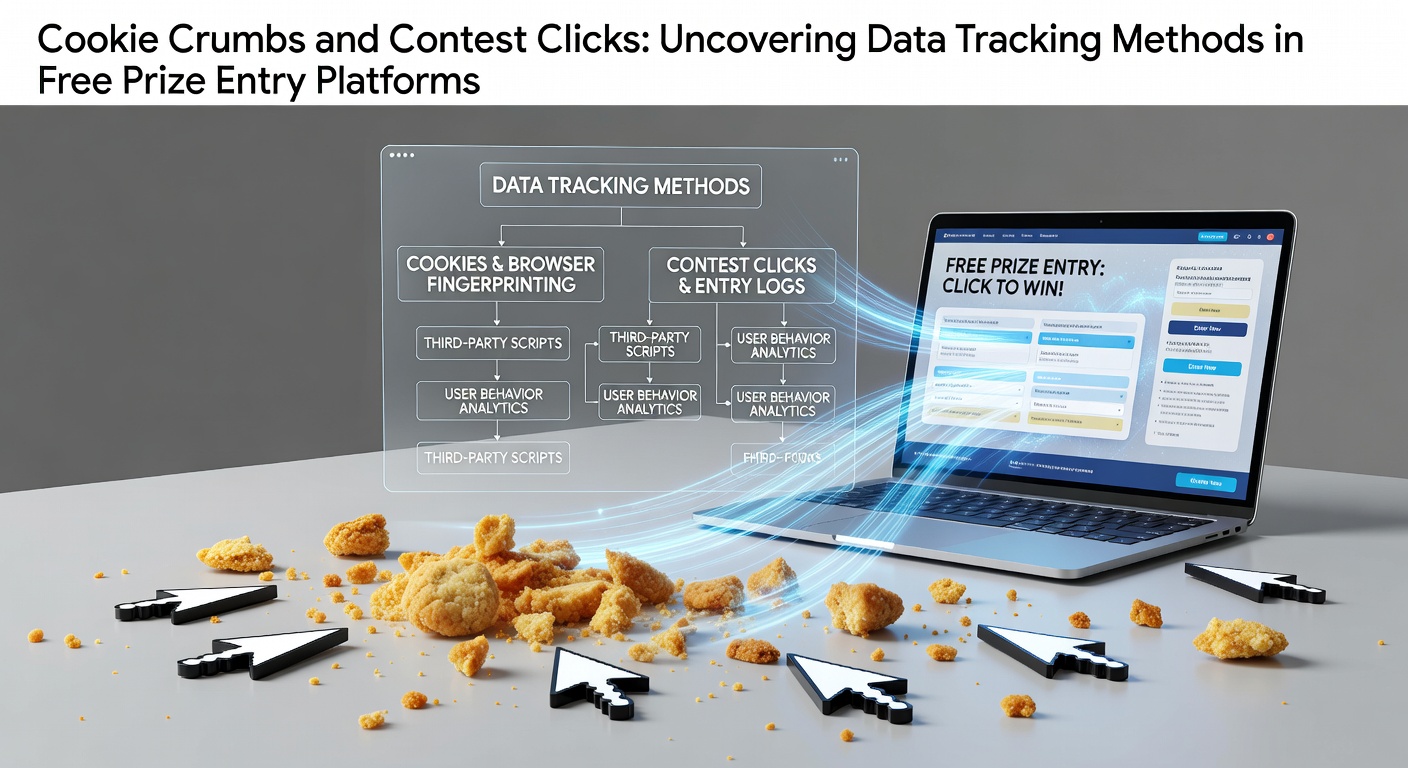
Cookie Crumbs and Contest Clicks: Uncovering Data Tracking Methods in Free Prize Entry Platforms
Free prize entry platforms rely on various data collection techniques to manage user interactions, verify entries, and optimize operations, and observers note that cookies along with click tracking form core components of these systems. These methods allow platforms to record participation patterns while handling the volume of submissions that occur daily across multiple sites, and researchers have documented how such tools operate within the framework of online contests and sweepstakes promotions.
Core Mechanisms of Cookie Deployment
Platforms place cookies on user devices upon initial visits to contest pages, and these small data files store details such as session identifiers, entry timestamps, and device characteristics that help distinguish one participant from another during high-traffic periods. Session cookies expire when a browser closes, whereas persistent cookies remain for longer durations to support features like remembering login preferences or tracking repeat submissions across days or weeks, according to technical documentation from major sweepstakes operators.
Third-party cookies from advertising networks or analytics providers often accompany first-party ones, and this setup enables aggregated data sharing that informs targeted promotions while complying with existing consent requirements in various jurisdictions. Data shows that platforms implement these distinctions to balance functionality with regulatory demands, and one study from a European research consortium highlighted how cookie categories influence entry completion rates in recurring online events.
Click Tracking and Behavioral Data Collection
Contest clicks generate streams of information that platforms capture through embedded scripts, and these scripts record actions such as button selections, page navigation sequences, and time spent on entry forms. Analysts observe that such tracking supports fraud detection by identifying unusual patterns like rapid-fire submissions from single IP addresses, and it also assists in refining user interfaces based on aggregate interaction metrics gathered over months of operation.
Pixel-based trackers load invisibly on confirmation pages or social sharing prompts, and they transmit confirmation signals back to central servers that log successful entries or referral conversions. Figures from industry reports indicate that click data contributes to models predicting peak participation times, particularly around seasonal promotions that run through spring and into early summer months including May 2026 schedules announced by several operators.
Regulatory Context and Compliance Practices
Government agencies enforce rules governing data practices on these platforms, and the Federal Trade Commission outlines requirements for transparent disclosure of tracking methods in its consumer protection guidelines available at ftc.gov. Platforms must provide opt-out mechanisms for certain cookies while maintaining core functionality for entry validation, and compliance teams routinely audit implementations to align with updates in data protection standards.
Canadian authorities through the Office of the Privacy Commissioner have issued guidance on cross-border data flows that affect multinational contest sites, and this framework requires explicit consent for persistent tracking in some cases. Observers note that platforms adjust their cookie policies accordingly, and research from academic institutions in Australia further examines how these adaptations influence user trust levels in free-to-enter promotions.
What's interesting here is how layered consent banners now appear on many entry sites, presenting users with granular choices about analytics versus essential cookies, and this approach stems directly from evolving legal expectations across regions. Data indicates that platforms logging higher compliance rates often see sustained participation volumes, whereas those with abrupt policy shifts encounter temporary dips in submissions.
Advanced Tracking Integrations
Beyond basic cookies, some platforms incorporate fingerprinting techniques that combine browser settings, screen resolution, and font lists to create unique user profiles without storing traditional files, and experts have examined these methods in reports focused on digital contest integrity. Such approaches help limit multiple entries from the same individual while preserving anonymity in aggregated datasets used for prize allocation analysis.
Machine learning models process the resulting click streams to flag anomalies in real time, and operators apply these insights during high-volume events where thousands of entries arrive within minutes. One case documented by a North American gaming association showed how integrated tracking reduced duplicate submissions by measurable percentages without altering the underlying contest rules.
Future Developments in Data Handling
Emerging browser changes that phase out third-party cookies prompt platforms to explore server-side tracking alternatives, and these shifts require updates to data storage architectures that maintain entry verification accuracy. Industry organizations track these transitions closely because they affect how referral programs and daily prize cycles collect participation metrics across diverse user bases.
Evidence suggests continued refinement of consent interfaces will accompany these technical adjustments, and platforms testing new protocols report stable engagement levels when users receive clear explanations of data uses. Regulatory bodies in multiple countries continue to issue clarifications that shape implementation timelines through 2026 and beyond.
Conclusion
Tracking methods in free prize platforms combine cookies with click analytics to support operational needs while navigating privacy regulations, and the documented practices reveal a balance between functionality and compliance across global operations. Continued monitoring by oversight agencies and industry groups ensures these systems evolve alongside technological and legal developments, providing structured data flows that underpin contest administration at scale.