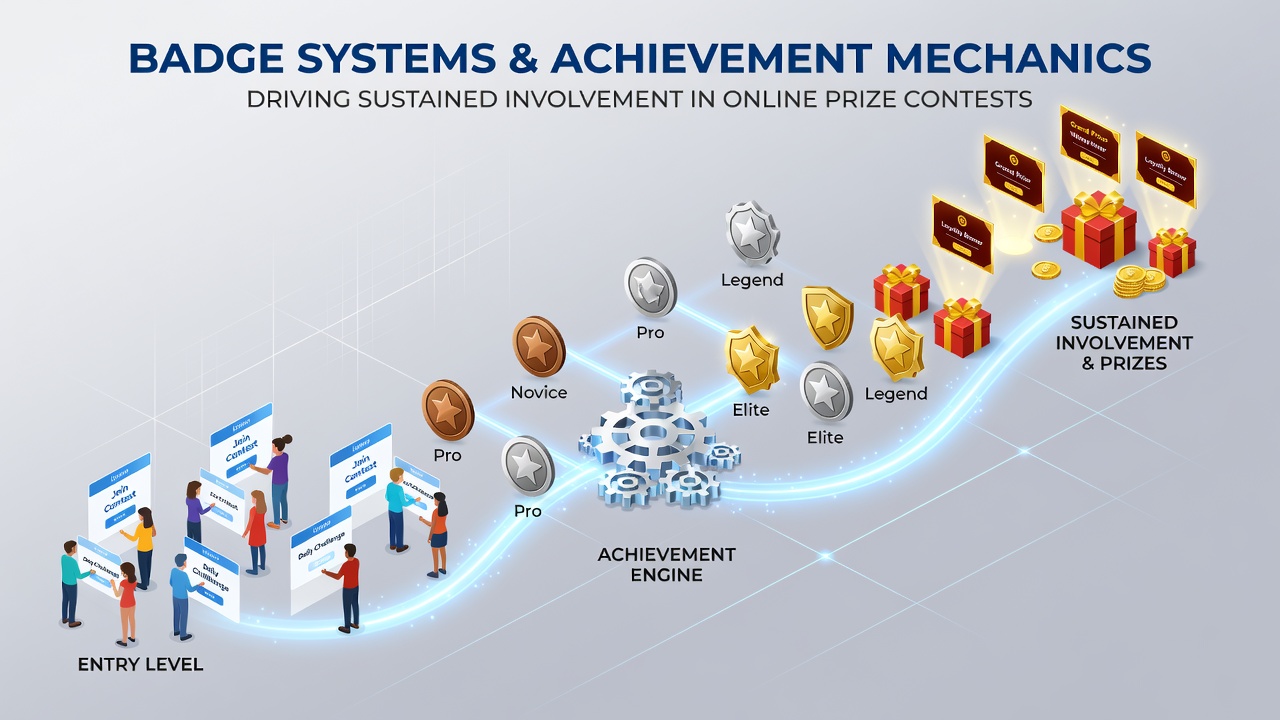
Badge Systems and Achievement Mechanics Driving Sustained Involvement in Online Prize Contests
Badge systems assign visual markers to participants based on specific actions such as completing daily entries, reaching submission milestones, or maintaining consistent activity over defined periods, and these markers appear directly within user profiles on contest platforms. Achievement mechanics layer additional layers onto this framework by unlocking tiers that grant temporary boosts like extra entries or priority in certain draws, which in turn encourage repeated logins and submissions throughout multi-week events. Platforms integrate these elements into free-to-enter prize promotions where users accumulate points through routine tasks, and the resulting badges serve as persistent indicators of progress that remain visible across sessions.
Mechanics Behind Badge Assignment and Progression
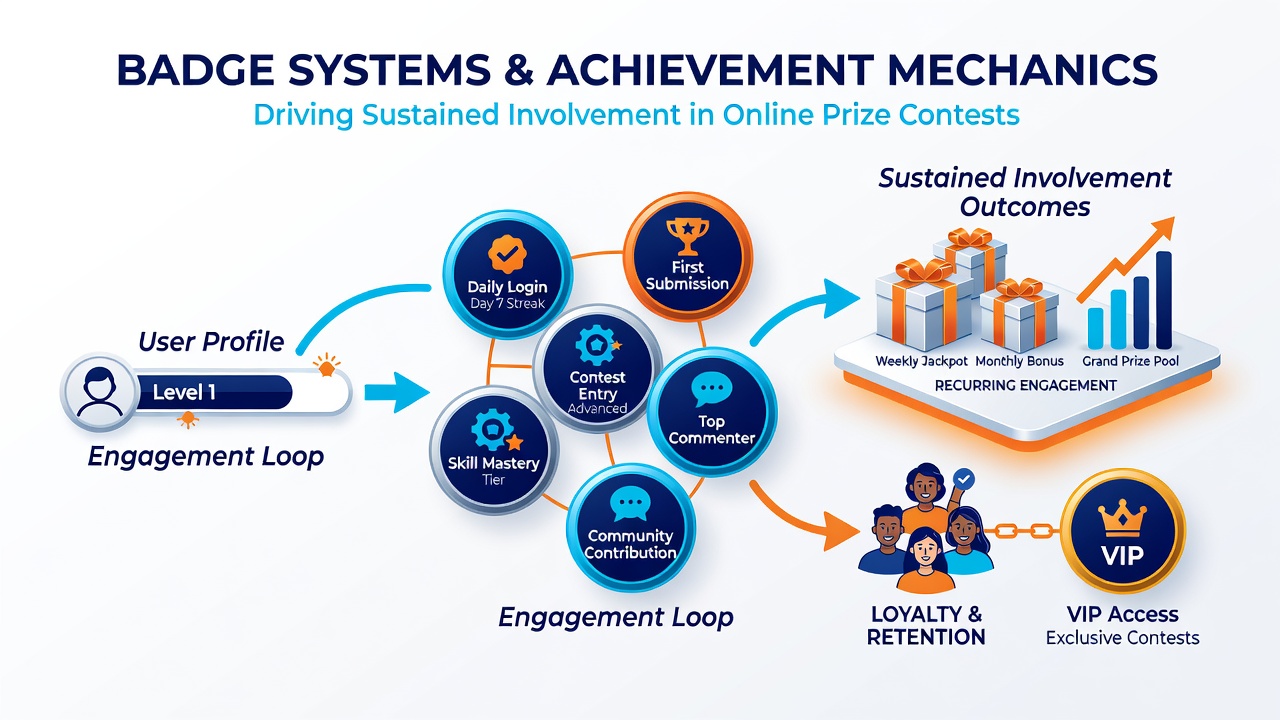
Systems track user behavior through automated logs that record entry frequency, variety of contests entered, and social sharing actions, then translate those metrics into badge categories such as "Daily Contributor" or "Streak Holder" that update in real time. Participants advance through levels when cumulative actions meet thresholds, for instance logging entries on seven consecutive days or submitting to ten distinct promotions within a calendar month, and each new badge displays alongside profile statistics without altering the underlying random selection process for prizes. Data from platform analytics shows these visual cues correlate with higher return rates because users reference their collections when deciding whether to continue participation in ongoing draws.
Designers calibrate badge difficulty so early achievements require minimal effort while later ones demand sustained patterns, and this graduated structure keeps engagement distributed across weeks rather than concentrated around single deadlines. Observers note that badges function independently of actual prize outcomes, focusing instead on process-oriented recognition that persists even when entries do not result in wins.
Achievement Unlocks and Their Role in Entry Volume
Achievement mechanics often tie temporary advantages to badge collections, such as granting one additional free entry after five badges are earned or extending streak multipliers when users maintain activity through holiday periods. In July 2026 several multi-state platforms reported measurable upticks in submission volumes during weeks when achievement calendars aligned with seasonal promotions, with users completing side tasks like profile updates or referral confirmations to unlock the next tier. These unlocks operate within regulatory boundaries that prohibit any guarantee of prize wins, yet they increase the perceived value of continued involvement by adding layers of immediate feedback.
Research from academic institutions such as those affiliated with the Federal Trade Commission guidelines on promotions indicates that transparent display of achievement criteria reduces confusion and supports compliance across jurisdictions. Platforms publish clear rules explaining how badges accumulate and what each achievement provides, which in turn limits disputes while maintaining steady participation flows.
Patterns Observed Across User Segments
Longitudinal tracking reveals that users who accumulate at least three badges within the first two weeks of a promotion cycle demonstrate higher total entry counts over the remaining duration compared with those who receive no badges early. Geographic clusters in states with permissive contest regulations show denser badge adoption, while device data indicates smartphone users complete badge-related micro-tasks more frequently than desktop participants because mobile interfaces surface progress notifications more prominently. Achievement systems also intersect with referral features, where sharing a contest link can trigger a collaborative badge that credits both the referrer and the new participant.
Industry reports from groups such as the International Center for Responsible Gaming document how these mechanics operate in regulated environments without crossing into prohibited gambling structures, and compliance teams review badge algorithms regularly to ensure random prize allocation remains untouched. Participants receive notifications when new achievements become available, which sustains momentum between major prize announcement cycles.
Conclusion
Badge systems combined with achievement mechanics create structured feedback loops that align user actions with platform goals of consistent involvement across extended contest periods. Data collected through 2026 shows these features increase repeat submissions while preserving the fairness standards required by state and federal oversight bodies. As platforms refine tracking precision and expand tier options, the core relationship between visible progress markers and sustained entry behavior continues to shape how free prize promotions maintain active user bases over time.