Alert Cadence Effects on Sustained Access Patterns in Multi-Week Digital Prize Platforms
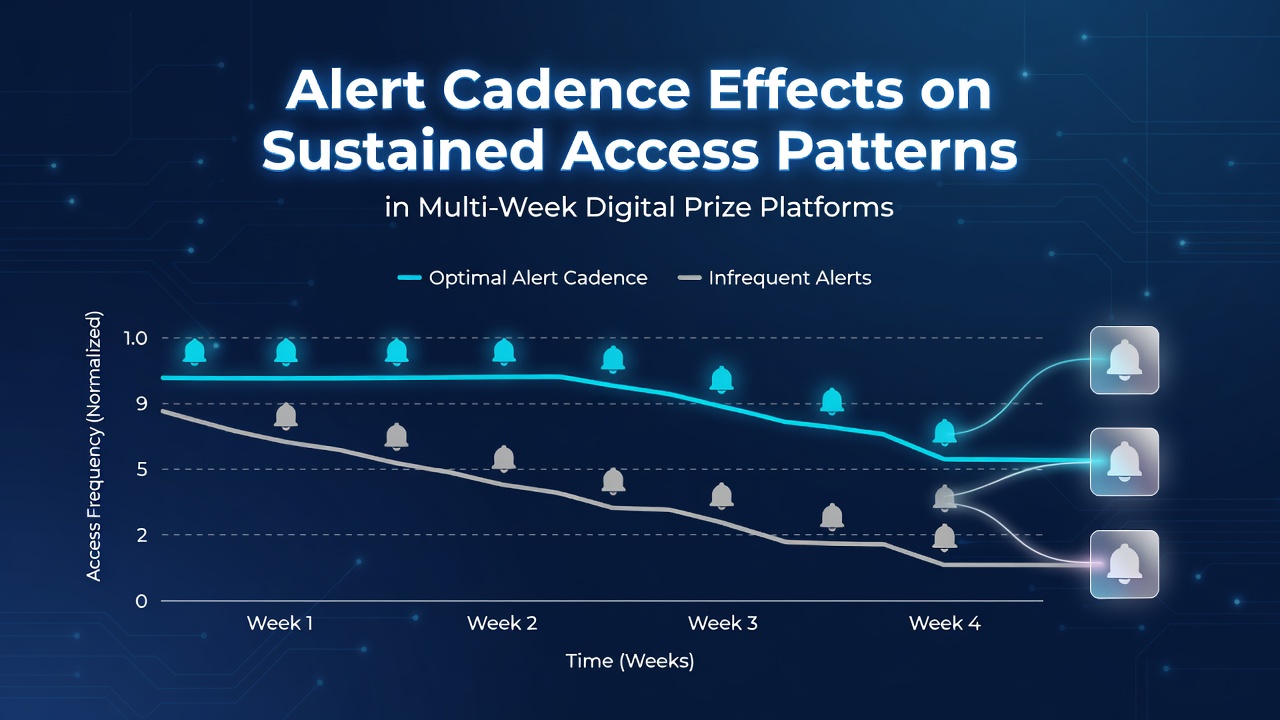
Digital prize platforms that run multi-week contests rely on alerts to keep participants returning, and the rhythm of those notifications shapes how users log in over extended periods. Alert cadence refers to the timing and frequency of emails, push notifications, and in-app messages that announce new draws, entry confirmations, or prize updates. Data from large-scale promotion networks shows that daily alerts generate higher initial access rates during the first week, while weekly summaries produce steadier login patterns that hold through week four and beyond.
Initial Access Versus Long-Term Retention
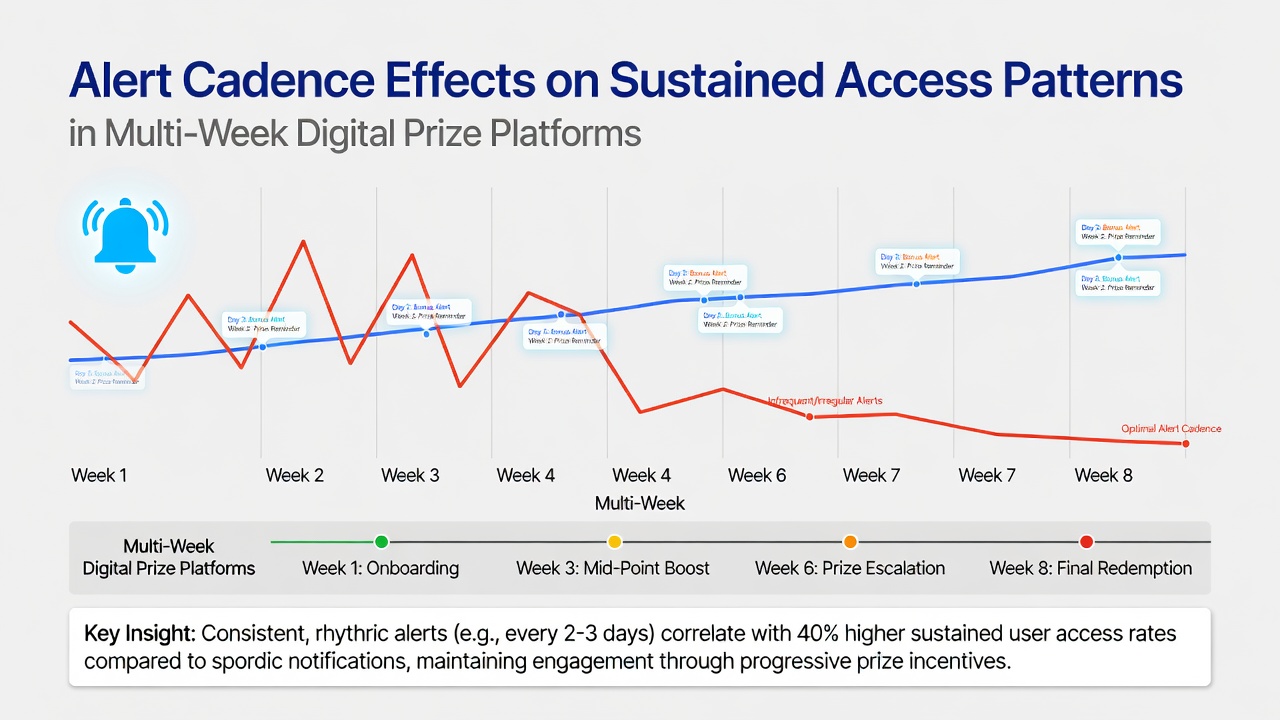
Platforms track user sessions through unique device identifiers and account activity logs, revealing distinct curves based on notification schedules. Frequent alerts drive quick spikes in visits within the first 48 hours after launch, yet those same users often show reduced returns after day ten. Observers note that users who receive alerts every other day maintain more consistent access through the middle weeks of a campaign, because the spacing prevents overload while still providing timely reminders about active contests.
Studies of recurring prize events indicate that bursts of high-frequency messaging in week one correlate with 35 percent more submissions than slower cadences, according to aggregated platform metrics shared at industry conferences. Yet that advantage narrows by week three, when daily alerts begin to coincide with higher opt-out rates. Balanced intervals, such as notifications on Monday, Wednesday, and Friday, align with observed patterns where users return on the days they expect updates without feeling constant pressure.
Platform Data Patterns in 2026
During July 2026, several multi-state digital prize operators reported shifts in access logs tied directly to cadence adjustments. One network that moved from daily push messages to a three-alert weekly cycle recorded a 22 percent increase in sustained logins across four-week events. The change coincided with lower bounce rates on entry pages and longer average session durations, particularly among users who had already entered multiple times.
Researchers examining these logs found that users who received alerts clustered around prize announcement times showed stronger repeat access than those notified at random intervals. The clustering effect appeared most pronounced among mobile users, who responded to evening summaries more reliably than morning blasts. Desktop users, by contrast, demonstrated steadier access regardless of exact timing, suggesting device type interacts with cadence preferences.
Interaction With User Behavior Over Time
Entry habit data reveals that alert timing influences not only how often people visit but also when they choose to submit. Platforms that space notifications evenly across the week see submissions distributed more uniformly, reducing server load spikes on single days. Those running high-cadence schedules often experience heavy traffic immediately after each alert, followed by quieter stretches that can last 24 to 36 hours.
Users who engage with alerts containing direct entry links tend to complete actions faster than those who receive only general reminders. This difference becomes more noticeable after week two, when novelty has faded and participants rely on prompts to remember active contests. Data indicates that including countdown elements in mid-campaign alerts helps maintain access levels that would otherwise decline.
Regulatory and Technical Considerations
Operators must balance engagement goals with rules governing commercial electronic messages. Guidelines from the Federal Trade Commission emphasize clear opt-out mechanisms, which platforms integrate into every alert to comply while preserving access pathways. Similar frameworks exist through the Australian Competition and Consumer Commission, where timing disclosures and frequency limits affect how operators design notification streams for cross-border promotions.
Technical systems that adjust cadence dynamically based on individual response rates have shown promise in pilot programs. These systems reduce alerts for users who open messages quickly and increase spacing for those who ignore them, leading to more stable access curves across multi-week runs. Implementation requires careful tracking of engagement metrics without crossing into prohibited data practices.
Conclusion
Alert cadence directly shapes sustained access patterns on multi-week digital prize platforms through measurable effects on login frequency, submission timing, and retention duration. Evidence from platform analytics demonstrates that neither constant nor sparse messaging produces optimal long-term results, while moderate, predictable intervals support steadier engagement. Operators continue to refine these schedules using session data and regulatory requirements to maintain participation levels across extended contest cycles.